In the global economy of frozen foods, pharmaceuticals, and long-term preservation, few technologies are as critical as Frozen Storage. Unlike chilled storage, which merely slows bacterial growth, frozen storage halts it almost entirely by reducing product temperature to -18°C or lower. At these temperatures, water turns to ice, microbial activity ceases, enzymatic reactions become negligible, and products can remain safe and nutritious for months or even years. Frozen storage is the engine behind the multi-billion-dollar frozen food industry, enabling consumers to enjoy ice cream on a hot summer day, restaurants to serve frozen French fries, and hospitals to store frozen plasma and tissue samples. But effective frozen storage requires precision engineering: industrial-grade refrigeration, high-density insulation, real-time temperature monitoring, backup power systems, and strict inventory rotation. For businesses dealing in frozen goods—importers, distributors, supermarkets, restaurants, and healthcare providers—professional frozen storage is not an expense. It is an essential investment in product integrity and customer trust.
Frozen Storage in Riyadh
Operating frozen storage in the heart of the Saudi desert presents challenges unimaginable in temperate climates. Frozen Storage in Riyadh must contend with summer temperatures that regularly exceed 45°C, with asphalt and concrete surfaces radiating heat well above 60°C. This extreme thermal gradient—a difference of nearly 65°C between outside air and the frozen storage interior—places enormous stress on refrigeration systems, insulation, and building envelopes. Every time a delivery truck door opens, warm, humid air rushes in, creating immediate condensation that can quickly turn to ice on floors, racks, and evaporators. Consequently, frozen storage facilities in Riyadh require significantly larger refrigeration capacities than their European or North American counterparts. Professional facilities use 150mm to 200mm of high-density polyurethane insulation, rapid-roll insulated doors with air curtains, and redundant refrigeration systems with automatic backup. Additionally, Riyadh’s position as a major distribution hub means frozen storage must offer easy access to major highways and flexible receiving hours. For businesses serving Riyadh’s 7+ million residents—from ice cream distributors and frozen meat importers to pharmaceutical companies—professional frozen storage is non-negotiable for maintaining cold chain integrity.
Frozen Storage in Saudi Arabia
Across the entire Kingdom, the landscape of Frozen Storage in Saudi Arabia is undergoing rapid transformation driven by Vision 2030’s food security and logistics development goals. Saudi Arabia imports over 80% of its food, with frozen products representing a significant and growing share. However, Saudi Arabia’s geography creates three distinct frozen storage environments. The western region (Jeddah, Makkah) experiences high humidity from the Red Sea, leading to increased ice buildup on evaporator coils and requiring more frequent defrost cycles. The central region (Riyadh, Qassim) features extreme, dry heat that stresses refrigeration condensers, demanding robust cooling systems with adequate ventilation. The eastern region (Dammam, Khobar) faces both heat and periodic Gulf humidity, as well as salt-laden air that can corrode exposed components. Different industries have unique requirements: ice cream requires -25°C to -30°C, seafood needs rapid freezing immediately after catch, and pharmaceuticals demand validated -20°C to -40°C with redundant refrigeration. As Saudi Arabia invests in cold chain infrastructure, businesses need frozen storage partners with region-specific expertise and national reach.
Units: Your Trusted Partner for Frozen Storage
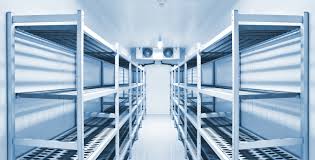
When your business demands frozen storage that is reliable, compliant, and strategically located, one company leads the market across Saudi Arabia: Units. As the top company for frozen storage solutions, Units operates state-of-the-art facilities in Riyadh, Jeddah, and Dammam. Every Units frozen storage chamber maintains temperatures as low as -30°C with variance never exceeding ±1°C, achieved through redundant refrigeration systems from global leaders. Facilities feature 150mm to 200mm of high-density polyurethane insulation, rapid-roll insulated doors with air curtains, and real-time temperature monitoring accessible to clients 24/7 via web portal. Units maintains SFDA compliance with audit-ready temperature logs, backup generators for 72-hour continuous operation, and 24/7 security surveillance. Whether you need -18°C for general frozen goods, -25°C for ice cream, or -40°C for pharmaceuticals, Units delivers. Visit their website at units.sa to schedule a facility tour, request a quote, or speak with a frozen storage specialist. With Units, your frozen products are not just stored—they are preserved with scientific excellence.
Conclusion
Frozen storage is the silent hero of modern food and pharmaceutical supply chains. Frozen Storage halts biological decay, preserves nutritional value, and extends shelf life from days to years. In the capital, Frozen Storage in Riyadh must overcome extreme heat with robust insulation, redundant refrigeration, and rapid door systems. Across the nation, Frozen Storage in Saudi Arabia requires region-specific designs for Jeddah’s humidity and Dammam’s salt air. Units stands as the top company, offering SFDA-compliant, technologically advanced, and professionally managed frozen storage facilities. Do not trust your valuable frozen inventory to substandard warehousing. Visit units.sa today and secure the frozen storage solution your business deserves.
Frequently Asked Questions (FAQs)
1. What is the ideal temperature for long-term frozen storage?
For most frozen foods including meat, poultry, seafood, vegetables, and prepared meals, the standard is -18°C or lower. Ice cream requires -25°C to -30°C. Some pharmaceuticals need -40°C or lower. Units offers multiple temperature zones to match your product requirements.
2. How does Units protect frozen products during power outages?
Every Units frozen storage facility has automatic backup generators that activate within 10 seconds of a power failure. Refrigeration systems maintain safe temperatures for 6–8 hours without active cooling due to high-performance insulation. Units maintains on-site fuel reserves for 72 hours of continuous operation.
3. How does Units handle Riyadh’s extreme heat for frozen storage?
Units’ Riyadh facility uses 150–200mm high-density polyurethane insulation, rapid-roll insulated doors with air curtains, high-velocity air curtains at all entry points, and redundant refrigeration systems sized for Saudi conditions—double or triple the compressor power of temperate-climate facilities.
4. Does Units offer blast freezing services?
Yes. Units operates industrial blast freezers that reduce product core temperature from +5°C to -18°C in under four hours. Rapid freezing creates smaller ice crystals, preserving cellular structure and resulting in better texture and flavor upon thawing—ideal for seafood, meat processors, and prepared meal manufacturers.
5. How can I monitor my frozen products remotely at Units?
Units provides every client with secure 24/7 web portal access showing real-time temperature readings from multiple sensors within your dedicated zone. You can view historical data, download logs for regulatory audits, and configure automated email/SMS alerts if temperatures exceed specified ranges for more than 15 minutes.